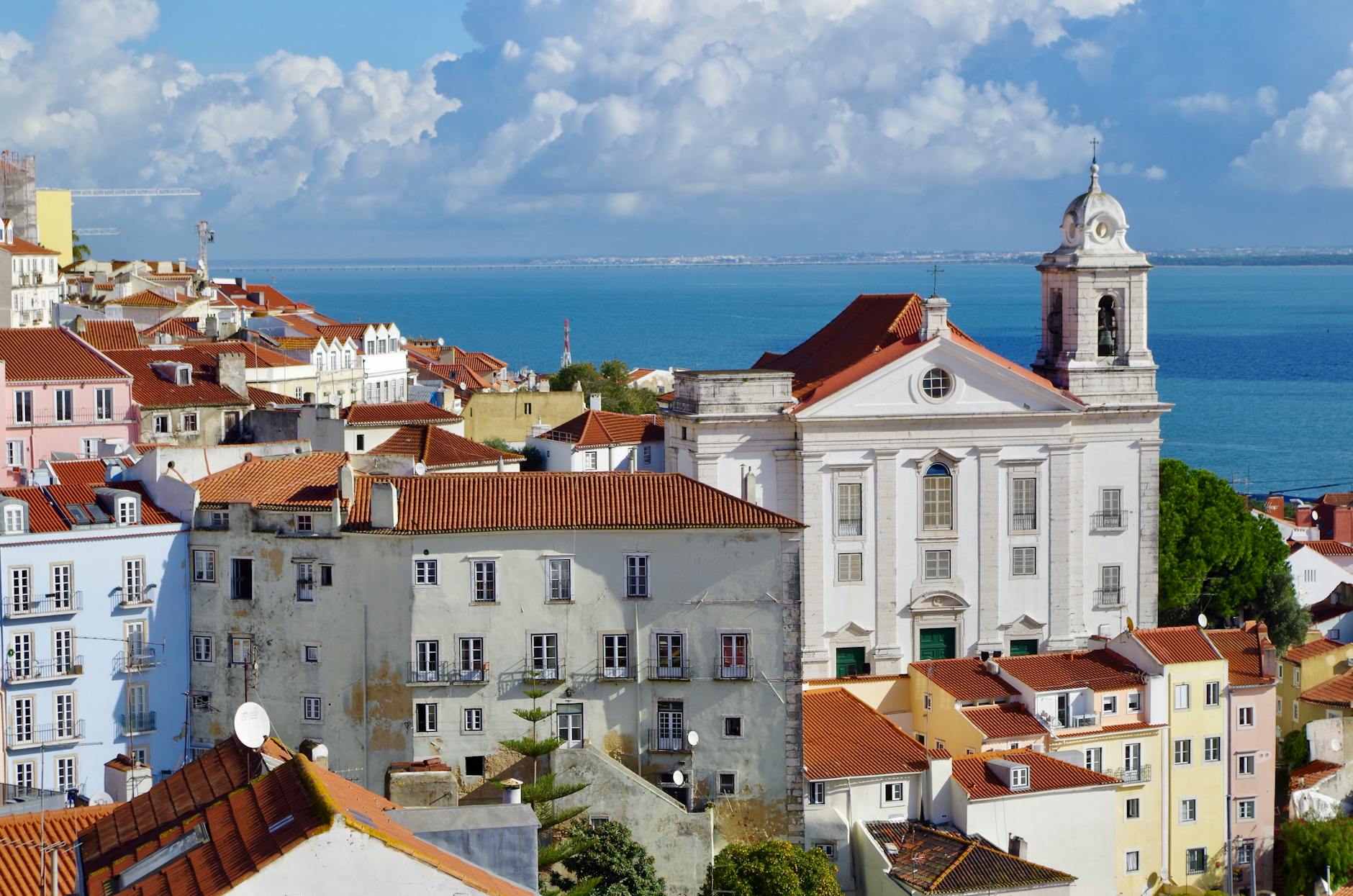
Alfama Lisbon is the city’s medieval heart — the only neighborhood that survived the 1755 earthquake mostly intact, where narrow cobbled lanes wind beneath laundry-strung balconies, fado spills from doorways at night, and the castle rises above as it has for nine centuries. It is the most photographed, most atmospheric, and most-loved neighborhood in Lisbon.
This guide covers everything you need for a great Alfama visit: a self-guided walking route, the best viewpoints (miradouros), where to eat, where to hear authentic fado, the practical details that catch people off-guard (the cobbles, the hills, the pickpockets on Tram 28), and the best hotels for staying inside Alfama itself. Updated for 2026.
Alfama at a Glance
- Where: Eastern central Lisbon, between Sé Cathedral and the Tagus River, climbing up to São Jorge Castle
- Vibe: Medieval, atmospheric, residential mixed with tourism
- Best for: Walking, fado, viewpoints, photography, slow wandering
- Time required: Half-day minimum; full-day for a thorough visit
- Hills: Real — closed-toe walking shoes essential
The Soul of Alfama: What Makes It Different
Three things set Alfama apart from every other Lisbon neighborhood:
1. It is medieval. Most of Lisbon was rebuilt after the catastrophic 1755 earthquake on the Pombaline grid plan — the orthogonal streets of Baixa. Alfama survived. The maze of narrow alleys, blind corners, and stairs follows the same 12th–14th century pattern.
2. It is still residential. Despite tourism, Alfama has roughly 7,000 permanent residents. You will see laundry on balconies, women shopping at corner mercearias, kids playing in alleys, elderly men chatting in doorways. The neighborhood lives.
3. It is the spiritual home of fado. Lisbon’s signature music genre was born partly here in the 19th century. The narrow lanes around Largo do Chafariz de Dentro are where most of the city’s casas de fado cluster. See our fado in Lisbon guide.
How to Get to Alfama
By Foot from Baixa
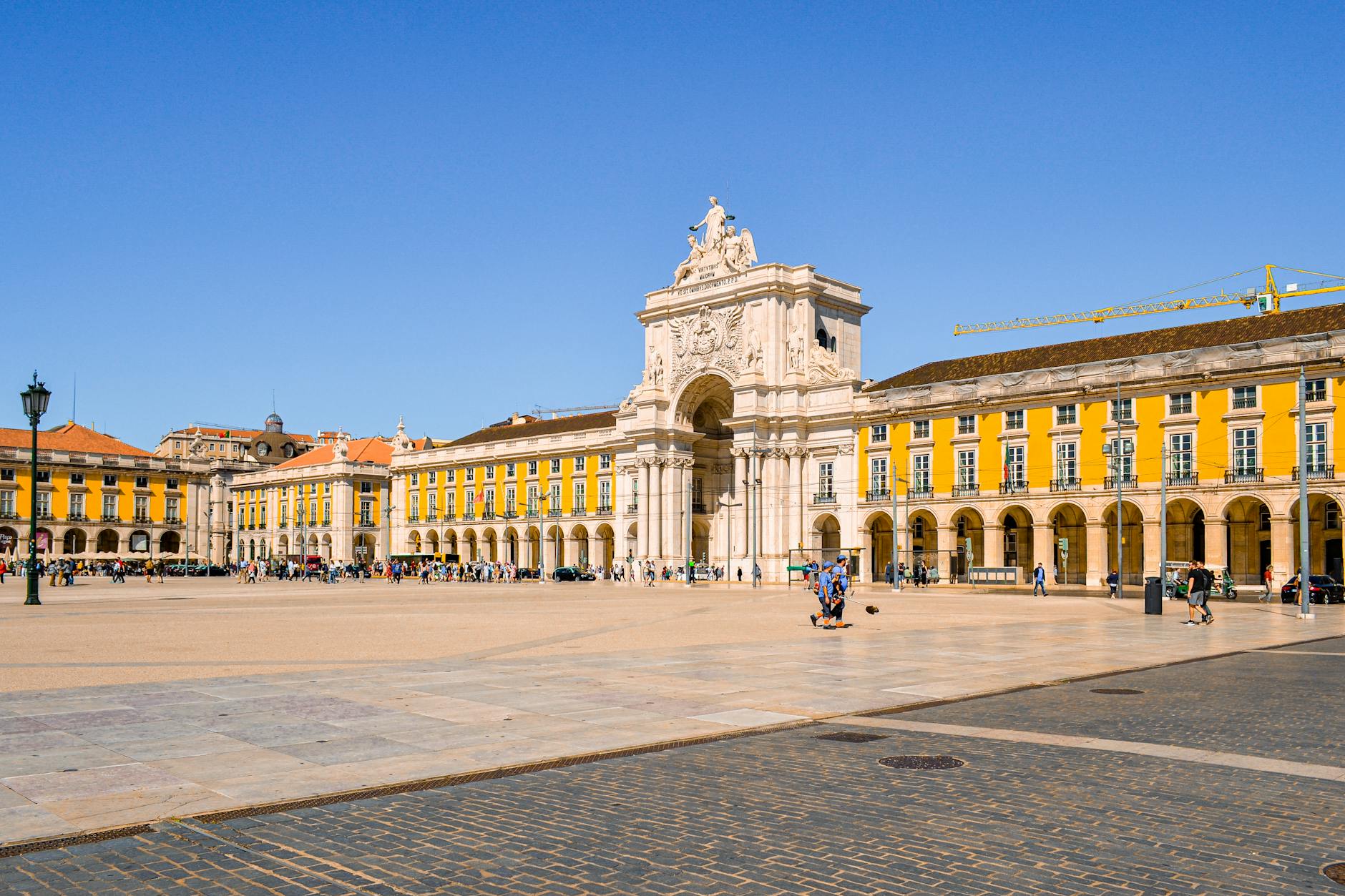
Walk east from Praça do Comércio along the riverfront, then turn north up Rua dos Bacalhoeiros, then up to Sé Cathedral. The neighborhood begins at the cathedral. Total: 10–15 minutes.
By Tram (Tram 28)
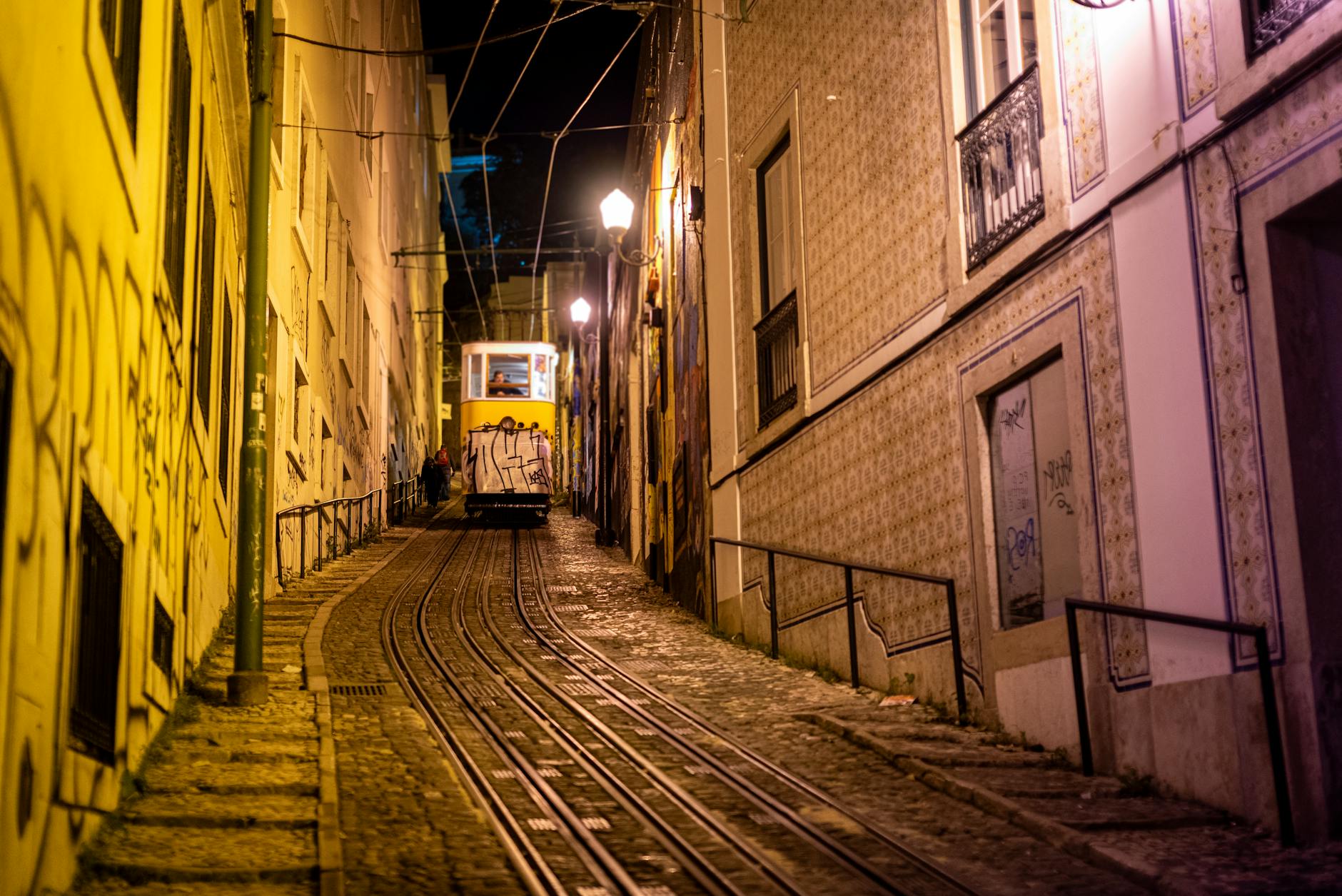
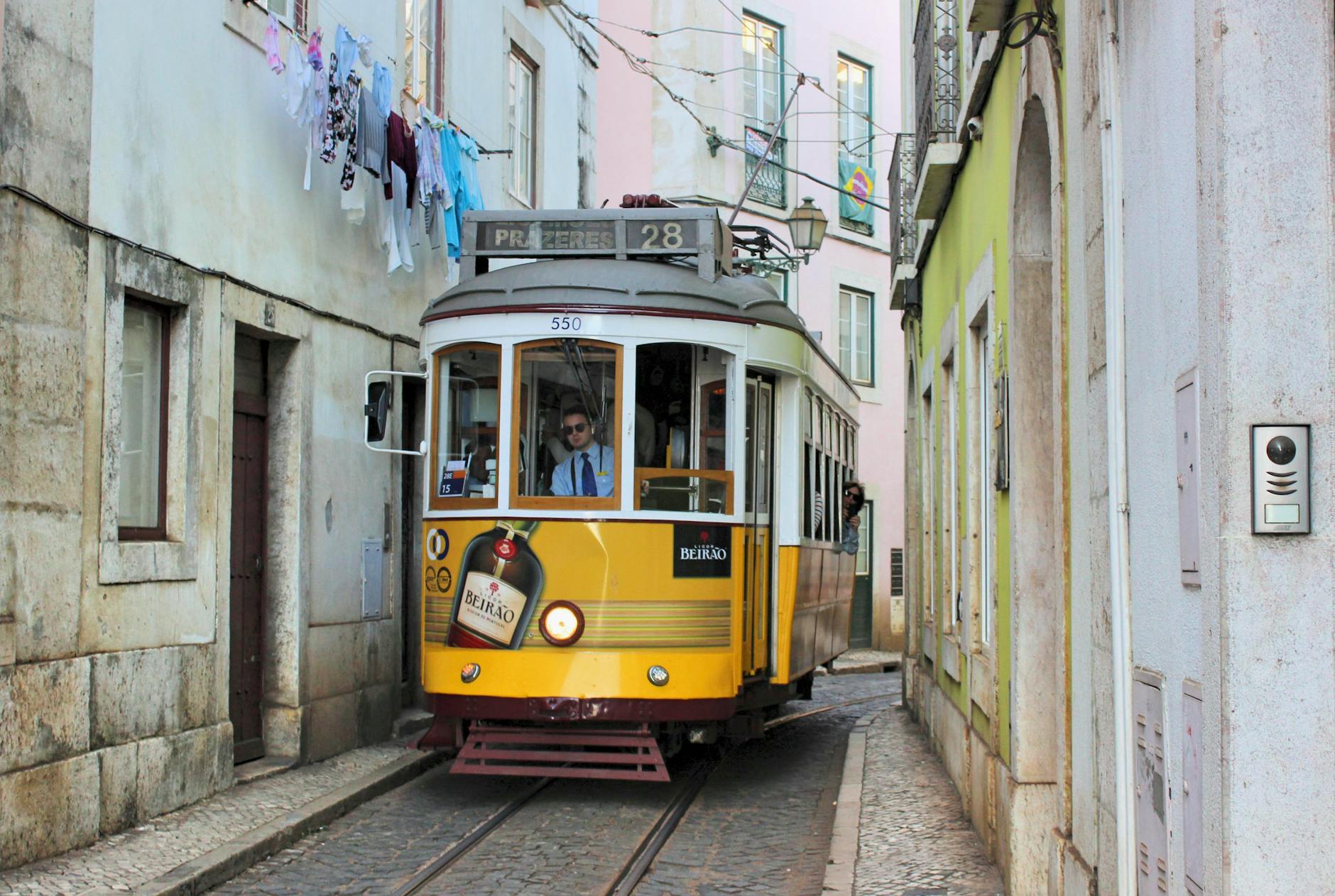
The famous Tram 28 winds through Alfama, stopping at “Sé,” “Limoeiro,” and “Largo das Portas do Sol.” €3 single or €1.80 with a Viva Viagem day pass.
By Metro
Santa Apolónia (Blue Line) is at the eastern edge of Alfama. €1.90 with a Navegante card.
By Tuk-Tuk
Useful with mobility issues but expensive (€15–€30 per person for short rides). Bus 737 is dramatically cheaper if you just want a ride to the castle.
Self-Guided Walking Route Through Alfama
The classic 2-hour Alfama loop, starting at Sé Cathedral:
Start: Sé Cathedral (Sé de Lisboa)
Lisbon’s 12th-century Romanesque cathedral, built immediately after the 1147 capture of the city from the Moors. Free to enter (small fee for treasury and cloisters). Spend 15–20 minutes.
Walk up Rua Augusto Rosa
Climb the cobbled lane from the cathedral. A brief steep section with photo opportunities at every turn.
Miradouro de Santa Luzia
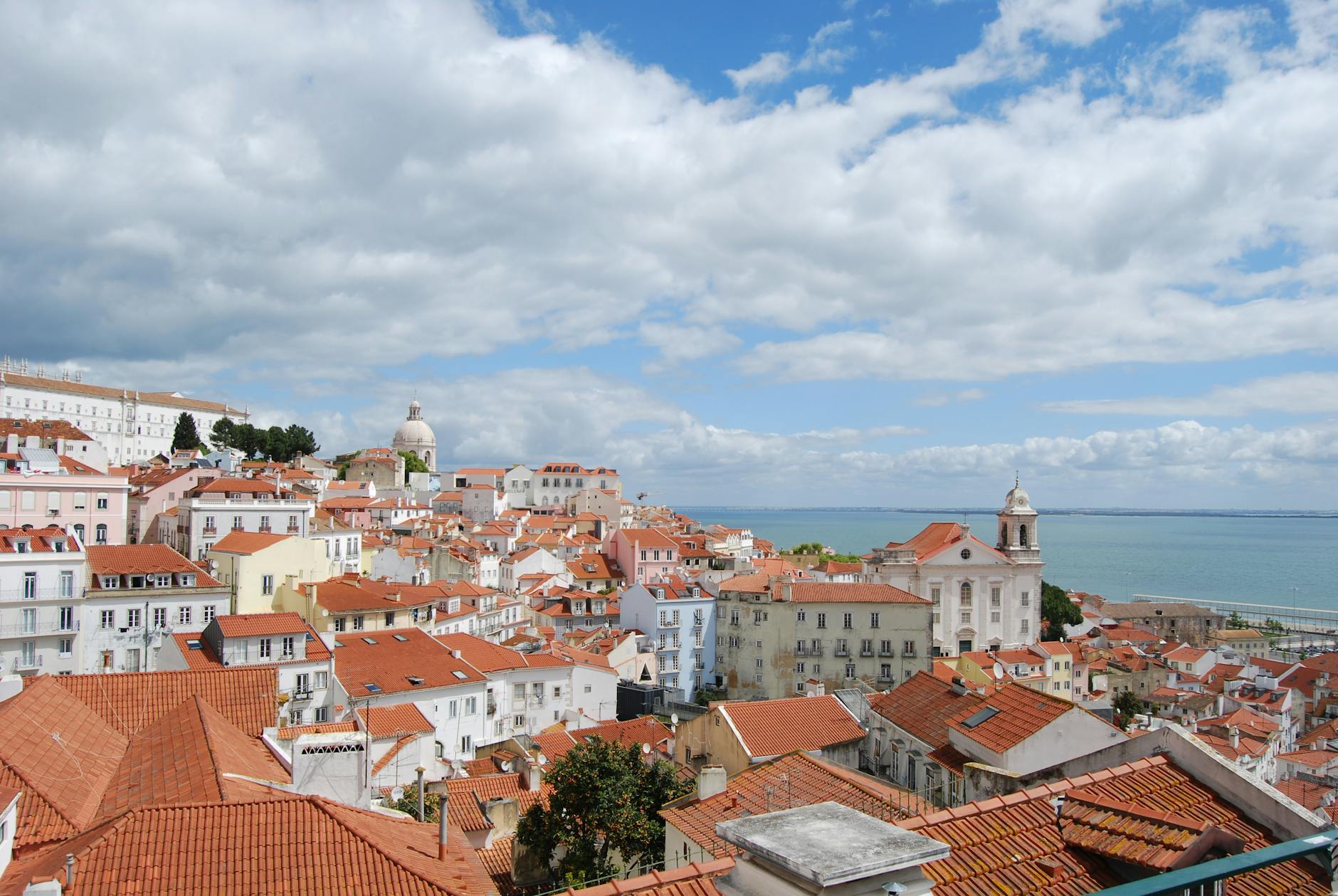
The most photographed viewpoint in Alfama. Lavender-tiled pergola overlooking the Tagus and Alfama’s red rooftops. Busy, but the view earns it. Allow 10 minutes.
Miradouro das Portas do Sol
100 meters east of Santa Luzia. Larger viewpoint, slightly less crowded, with a kiosk café and benches. The classic wide-angle “rooftops of Alfama” shot is taken here. Allow 10–15 minutes.
Optional: Decorative Arts Museum (Museu de Artes Decorativas Portuguesas)
An impressive collection of Portuguese furniture, silver, and tiles in an 18th-century palace. €4. Allow 30 minutes if interested.
Walk down through Alfama (no fixed route)
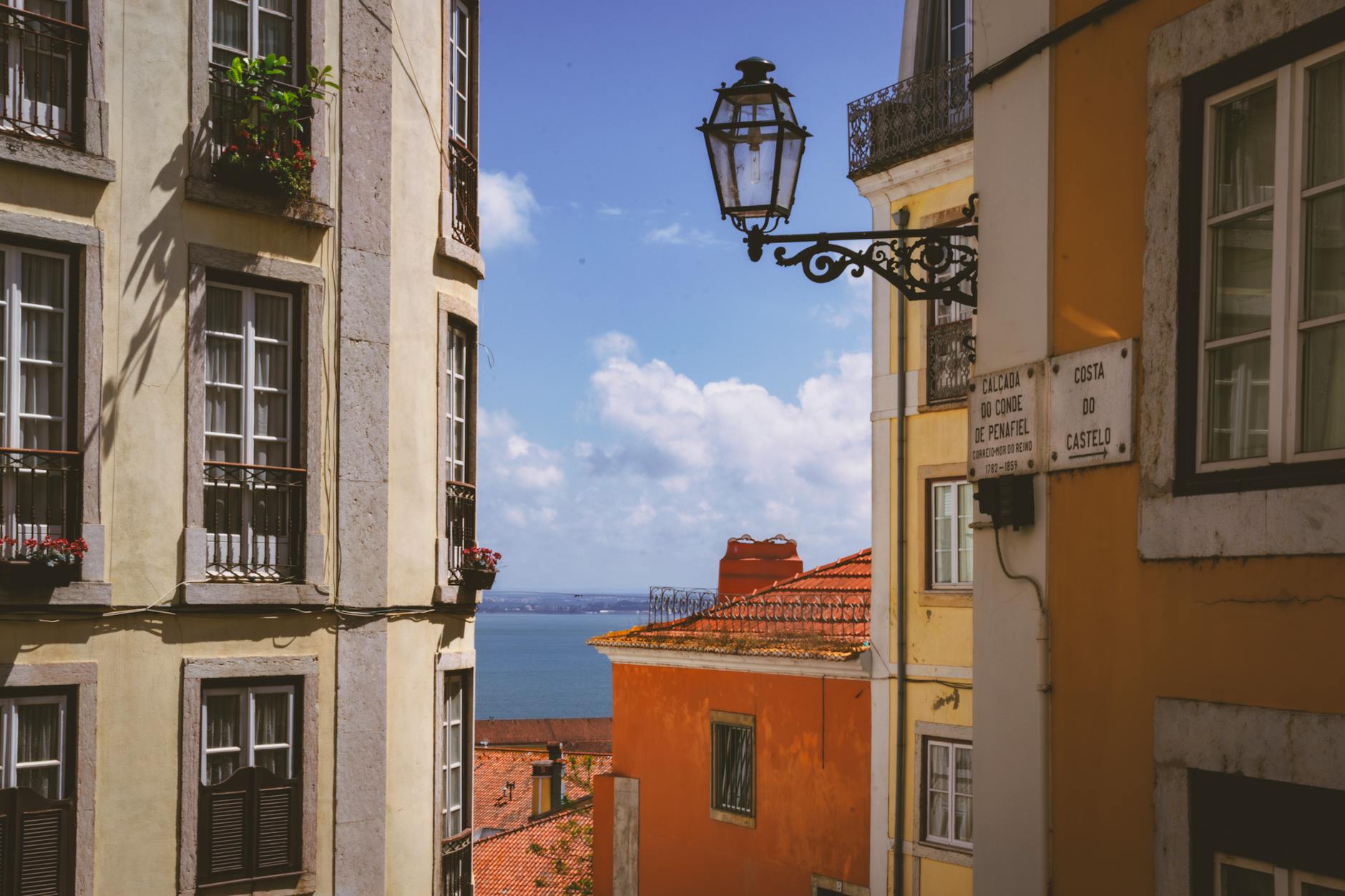
This is where Alfama works. From the viewpoints, descend through any of the narrow lanes — Rua de São Tomé, Beco da Cardosa, Rua dos Remédios. Drop the strict route and wander downhill. Get lost on purpose. Photograph the tile facades, the blue-and-white lampposts, washing strung between balconies, fadistas painted on murals.
Largo do Chafariz de Dentro (Fado Museum)
The square at the eastern edge of central Alfama, traditionally considered fado’s birthplace. The Museu do Fado covers fado history through audio archives and instruments (€5, allow 60 minutes). For anyone serious about Lisbon music history, this is essential.
Continue to the Pantheon (Igreja de Santa Engrácia)
10-minute walk east. Domed 17th-century church serving as Portugal’s National Pantheon — tombs of Amália Rodrigues (the Queen of Fado), Pedro Álvares Cabral (cenotaph), and other national figures. €8. Climb to the dome for one of central Lisbon’s best 360-degree views.
Optional: Feira da Ladra (Tuesdays and Saturdays only)
Lisbon’s centuries-old flea market in Campo de Santa Clara, just behind the Pantheon. See our Feira da Ladra guide.
Monastery of São Vicente de Fora
5-minute walk from the Pantheon. One of Lisbon’s most important Mannerist churches with extraordinary 18th-century azulejo cloisters. €5. Allow 45 minutes.
Walk back to Baixa via Sé Cathedral
Total walk: 2.5–3 hours including stops. Add 90 minutes if you climb up to São Jorge Castle from the viewpoints (separate dedicated visit recommended; see our São Jorge Castle guide).
Best Viewpoints in Alfama
- Miradouro de Santa Luzia — the iconic lavender-tiled pergola
- Miradouro das Portas do Sol — wider angle on Alfama’s rooftops
- Miradouro da Senhora do Monte — actually in Graça (just above Alfama). Highest viewpoint in central Lisbon. 360-degree panorama.
- The Pantheon’s dome — €8 ticket, unmatched eastern Lisbon view
- São Jorge Castle ramparts — €15, the ultimate Lisbon panorama
- Miradouro da Graça — large terrace with kiosk, popular for sunset
Where to Eat in Alfama
Tascas and Casual
- Pateo 13 — modern Portuguese in a candlelit courtyard. Mains €18–€26.
- Restaurante Largo do Castelo — old-school tasca near the castle, daily specials €11–€16
- Cantinho do Bobby — tiny bar/tasca, friendly owner, classic Portuguese
- O Pitéu da Graça — exceptional grilled fish in nearby Graça, €17–€24
Fado Houses (Dinner + Music)
- Mesa de Frades — the most-recommended fado venue in Lisbon. Inside an 18th-century chapel. Dinner + show €70–€95. Reserve 2–4 weeks ahead.
- Clube de Fado — historic, polished, near Sé Cathedral
- Parreirinha de Alfama — old-school, founded 1953
- A Baiuca — fado vadio (amateur) tavern, smaller and rougher than the casas above
See our fado in Lisbon guide for a full venue comparison.
Cafés and Pastries
- Pastelaria Versailles Alfama — pastel de nata + galão with terrace
- Quiosque Santa Luzia — small kiosk at the viewpoint, a coffee with the view
- Pão de Canela — small breakfast spot near Santa Apolónia
Where to Stay in Alfama
Staying inside Alfama means waking up in the medieval lanes, hearing fado from neighborhood tascas, and being a 5-minute walk from major attractions. Trade-offs: heavy luggage and Alfama’s hills don’t mix, and some streets are noisy at night.
Luxury
- Memmo Alfama — boutique hotel with the most photographed terrace pool in Lisbon. €350–€550 per night. See our best hotels in Lisbon guide.
- Santiago de Alfama — 15th-century building meticulously restored. €260–€420.
- Pousada de Lisboa — government-run historic-conversion hotel, slightly more central. €220–€380.
Mid-Range
- Solar dos Mouros — small boutique hotel with castle views. €160–€260.
- Lisbon Story Guesthouse — quiet, atmospheric, traditional Portuguese decor. €140–€220.
Budget
Hostels in Alfama are limited because the neighborhood is residential. Lisbon Old Town Hostel (€22–€30 dorm) and Alfama Patio Hostel (€20–€28 dorm) are the main options. See our best hostels in Lisbon guide.
Practical Considerations
The Hills Are Real
Alfama is genuinely steep. Most major lanes climb 30–60 meters of elevation across short distances. Closed-toe walking shoes with grip are essential — flip-flops, dress shoes, and high heels all betray you. Cobblestones get slippery when wet.
Heavy Luggage Doesn’t Mix
If staying in Alfama, take an Uber or taxi from the airport (€10–€18) directly to your hotel. Rolling suitcases on cobbles will destroy the wheels and the hills will exhaust you.
Pickpockets
Tram 28 and the major viewpoints are pickpocket targets. Standard precautions: front pockets, bags zipped, no flashy electronics on display. See our is Lisbon safe guide.
Respect the Residents
Alfama is residential. Keep voices low, don’t photograph people without asking, and don’t block narrow streets with large groups.
Cash for Small Tascas
Most Alfama restaurants accept cards now, but a few small fado vadio venues and tascas remain cash-only. Carry €30–€60.
The History of Alfama
Alfama’s name derives from the Arabic al-hamma, meaning “fountains” or “baths” — a reference to the Roman and Moorish thermal springs that once dotted the area. The neighborhood was the original heart of pre-modern Lisbon:
Roman period — Olisipo’s settled district outside the upper-town walls.
Moorish period (711–1147) — the heart of Islamic Lisbon, with mosques, baths, and narrow Arabic-pattern lanes still partially intact today.
Christian Reconquest (1147) — captured by King Afonso Henriques. Many Moorish residents converted; the neighborhood became Lisbon’s poorest quarter, home to fishermen, dockworkers, and a Jewish quarter (Judiaria).
1755 Earthquake — Alfama survived almost intact while most of Lisbon was leveled. Its medieval street pattern preserves what was lost everywhere else.
19th–20th century — birthplace of fado music. A working-class identity persisted; gentrification only began seriously in the 2000s.
Today — protected historic district, mix of long-term residents and tourist accommodations. For official neighborhood heritage listings, Visit Lisboa maintains a current events and cultural calendar for Alfama and the wider city.
Best Time to Visit Alfama
Early morning (8–10 AM) — quiet, cool, locals making coffee runs, light is soft for photography. The most photogenic version of Alfama.
Late afternoon (4–6 PM) — golden hour for photographs, viewpoints fill up but the atmosphere is worth it.
Evening (after 8 PM) — fado venues come alive. Dinner-hour Alfama has a different, more settled energy.
Avoid 11 AM–3 PM in summer — heat plus tourist crowds plus narrow shadeless lanes is genuinely miserable.
April–May and September–October are the best months overall. See our best time to visit Lisbon guide.
Things to Do in Alfama: The Greatest Hits
- Walk the medieval lanes — the headline experience
- Visit Sé Cathedral — Lisbon’s oldest church
- Climb to São Jorge Castle — see the dedicated guide
- Photograph from Miradouro de Santa Luzia
- Hear fado at Mesa de Frades or Clube de Fado
- Visit the Fado Museum
- See the Pantheon and São Vicente monastery
- Shop the Feira da Ladra (Tuesdays and Saturdays)
- Eat at a fado tasca
- Take Tram 28 from Largo Martim Moniz through Alfama (board mid-route to avoid queues)
Common Mistakes
1. Trusting the map too much. Alfama’s medieval lanes confuse Google Maps. Get lost on purpose — you can always orient by the castle (uphill) and the Tagus (downhill).
2. Wearing the wrong shoes. Flip-flops, dress shoes, heels — all betray you on Alfama’s cobbles.
3. Lining up for Tram 28 at Praça Martim Moniz. The queue can run 45–60 minutes. Board at Estrela or Graça mid-route instead.
4. Skipping the morning. Alfama is at its most photogenic and atmospheric before 10 AM.
5. Eating near the viewpoints. Walk 5 minutes downhill for dramatically better food at neighborhood tascas.
6. Hauling rolling luggage to your Alfama hotel. Take an Uber or taxi directly to the door.
7. Skipping fado. An evening fado set in Alfama is one of Lisbon’s defining experiences.
FAQ: Alfama Lisbon
Is Alfama worth visiting?
Yes — overwhelmingly. Most travelers rate Alfama their favorite Lisbon neighborhood. The combination of medieval atmosphere, viewpoints, fado, and genuine residential life is unusual in Europe.
How do I get to Alfama?
Walk from Praça do Comércio (10–15 minutes uphill), take Tram 28 to “Sé” or “Portas do Sol,” or take the metro to Santa Apolónia (Blue Line).
Should I stay in Alfama?
Yes if atmosphere matters more than convenience. The neighborhood’s medieval feel is unmatched, but the hills and cobbles make it harder with luggage. See our where to stay in Lisbon guide for the full trade-off breakdown.
How long do I need in Alfama?
Half-day minimum (3–4 hours) for the major viewpoints, walking, and a meal. A full day if you add São Jorge Castle, the Fado Museum, the Pantheon, and a fado dinner.
What is the best fado venue in Alfama?
Mesa de Frades for the most intimate atmospheric experience. Clube de Fado and Parreirinha de Alfama for more polished traditional venues. Tasca do Chico for fado vadio. See our fado in Lisbon guide.
Is Alfama safe?
Yes — generally one of Lisbon’s safer neighborhoods. Standard pickpocket precautions on Tram 28 and at viewpoints apply.
Can I drive in Alfama?
Strongly discouraged. The narrow medieval lanes are barely car-width, parking is essentially impossible, and many streets are restricted to residents. Walk, take taxis, or use tuk-tuks.
What is the difference between Alfama and Mouraria?
They are adjacent neighborhoods divided roughly by São Jorge Castle. Alfama (south of the castle) is more touristy and has the famous viewpoints. Mouraria (north of the castle) is grittier, more multicultural, and has the most authentic fado vadio scene.
What is the best month to visit Alfama?
April–May or September–October. Mild weather, manageable crowds, and the best light.
Bottom Line
Alfama is Lisbon’s oldest, most atmospheric neighborhood — medieval, still genuinely residential, and alive with fado at night. Walk it slowly with comfortable shoes, eat at tascas off the main viewpoints, hear fado at a candlelit casa in the evening, and resist the urge to plan every step. The neighborhood rewards wandering. For a real feel for the city, spend a half-day on the Alfama walking route and an evening fado set — you will leave with the city’s soul, not just its sights.
Continue planning with our Where to Stay in Lisbon pillar, our best hotels guide, our best hostels guide, and our Bairro Alto & Chiado guide.