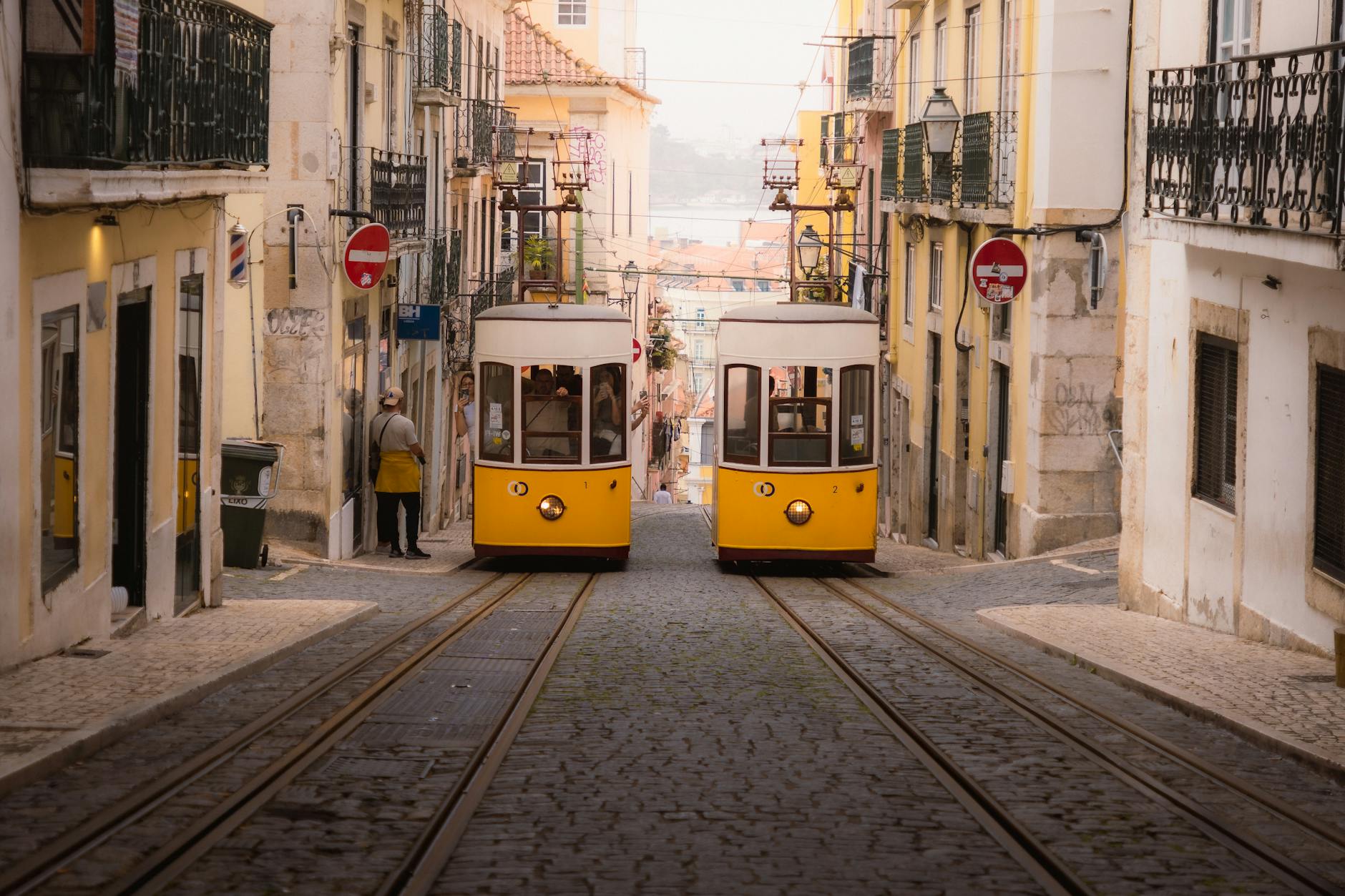
The Lisbon tram network is both working public transport and a living piece of city history — bright yellow vintage cars from the 1930s grinding up medieval lanes in Alfama, and larger modern carriages running the flat riverfront route to Belém. The famous Tram 28 alone carries 30,000 passengers a day. But riding it well takes a bit of local knowledge.
This guide covers every tram route in Lisbon: when to use which, how to pay, the Tram 28 vs the under-rated Tram 12, the riverfront Tram 15E to Belém, the history, and how to ride without losing your wallet to a pickpocket. Updated for 2026.
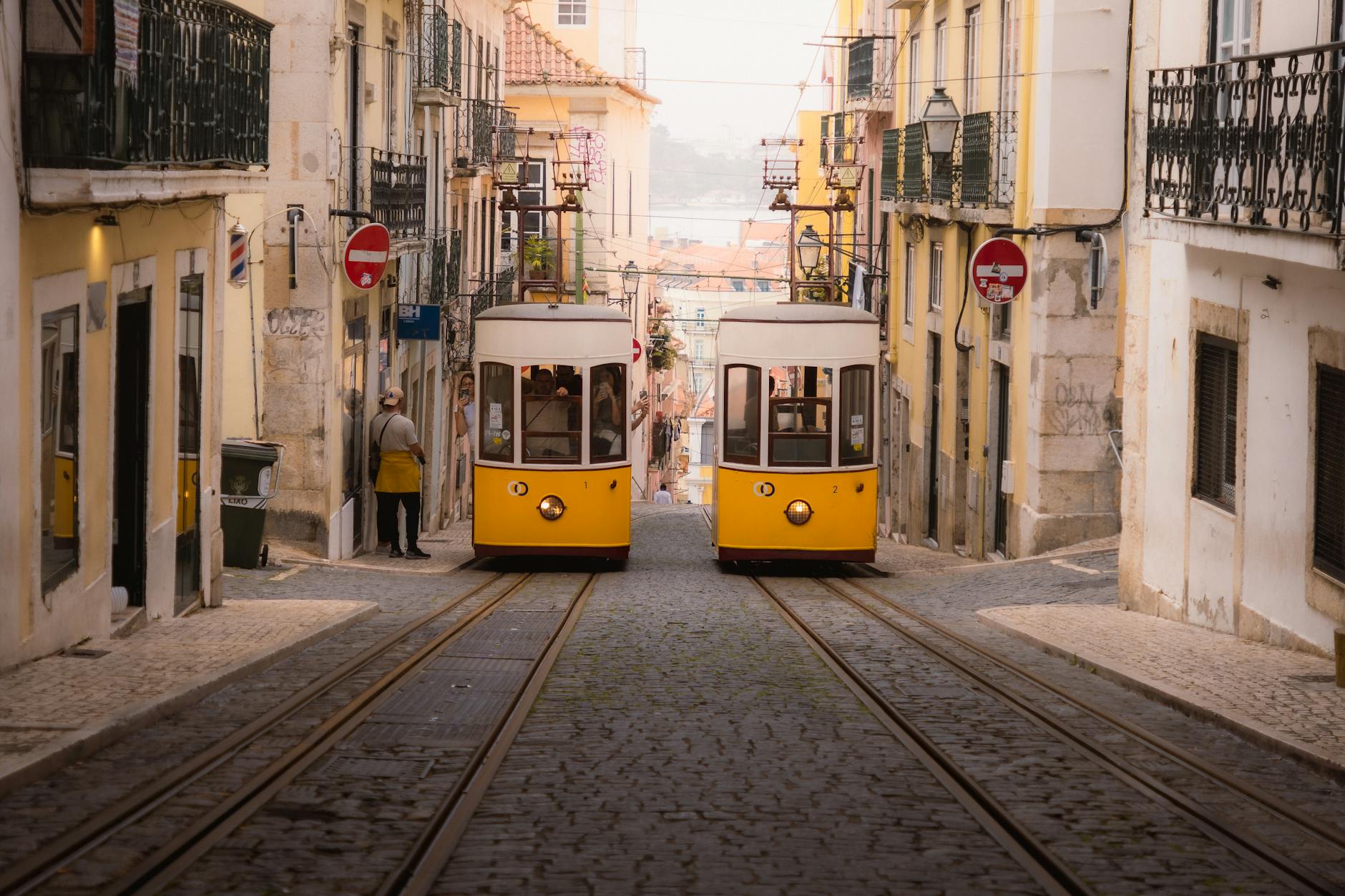
Lisbon Trams at a Glance
- Operator: Carris (Lisbon’s public transport company)
- Routes: Five lines (12E, 15E, 18E, 24E, 25E, 28E) plus the Elevador da Bica funicular
- Vintage trams: Routes 12, 18, 24, 25, 28 use 1930s Remodelado carriages
- Modern trams: Route 15E uses larger 1990s low-floor articulated cars
- Hours: Roughly 6 AM – 11 PM (varies by route)
- Cost: €3 single, €1.80 with Viva Viagem day pass
The Routes: Quick Reference
| Tram | Route | Key Stops | Best for |
|---|---|---|---|
| 28E | Martim Moniz → Campo de Ourique | Alfama, Sé, Chiado, Estrela | Iconic experience, sightseeing |
| 15E | Praça da Figueira → Belém | Cais do Sodré, Belém Tower | Practical transport to Belém |
| 12E | Praça da Figueira → Praça do Comércio loop | Sé, Alfama (smaller version of 28) | Quieter alternative to Tram 28 |
| 18E | Cemitério Ajuda → Cais do Sodré | Western neighborhoods | Locals, quiet route |
| 24E | Praça Luís de Camões → Campolide | Bairro Alto, hilltop residential | Locals, recently restored vintage line |
| 25E | Praça Camões → Estrela → Lapa | Western Lisbon, Estrela Basilica | Off-tourist-track sightseeing |
Tram 28E: The Famous One
Lisbon’s most-photographed and most-crowded transport — a 1930s yellow Remodelado tram that climbs through the medieval lanes of Alfama, past Sé Cathedral, through Chiado, past Estrela Basilica, and ends in residential Campo de Ourique. The route covers most of central Lisbon’s signature sights in a single 45-minute run.
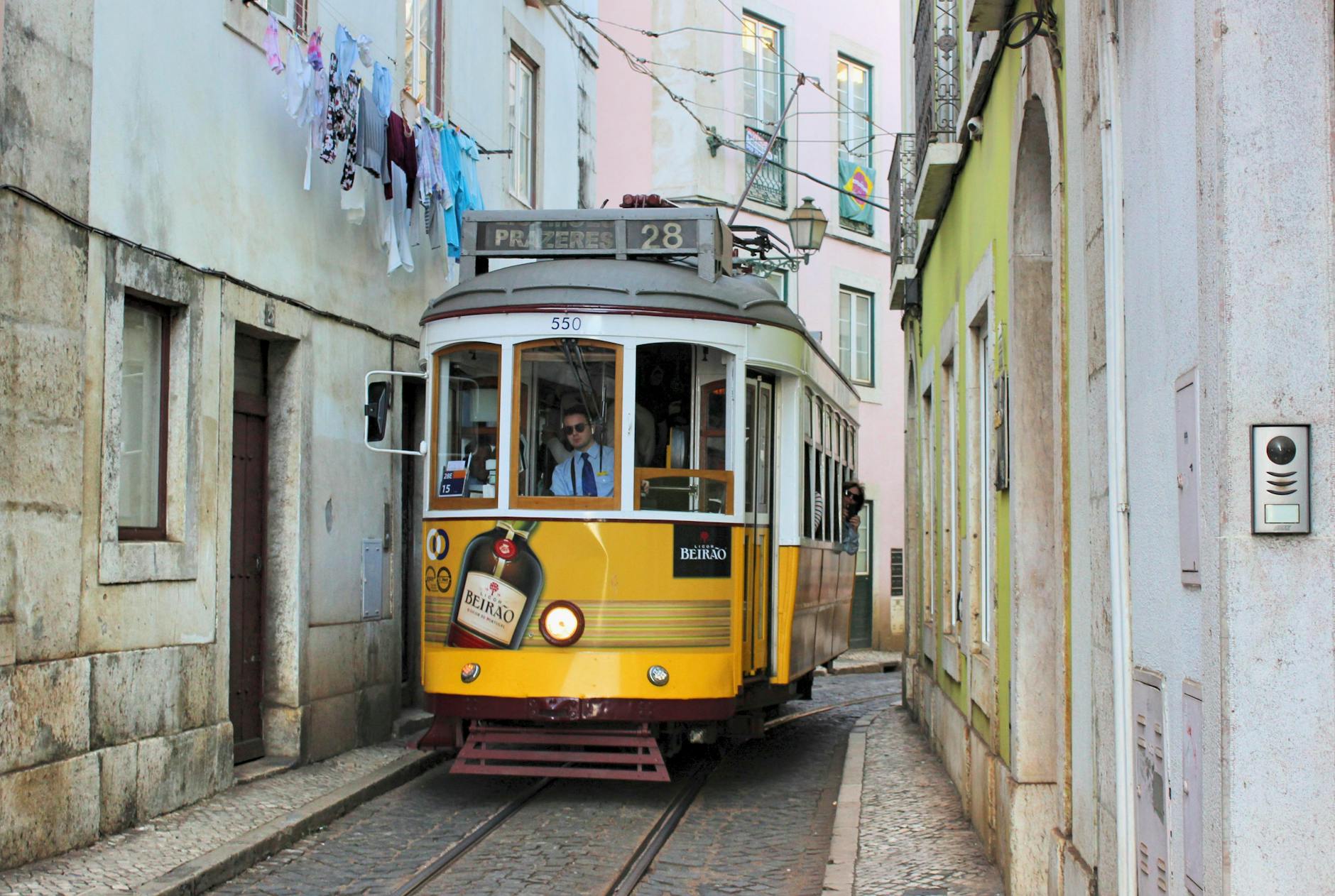
Route (45 minutes end-to-end)
Martim Moniz → Sé → Limoeiro → Largo das Portas do Sol → Miradouro de Santa Luzia → Chiado → Praça Luís de Camões → Estrela → Campo de Ourique
Why It’s Famous
- Vintage 1930s carriage: wooden interior, brass fittings, single-carriage operation
- Climbs hills no modern tram could manage (gradients up to 13.5%)
- Passes some of Lisbon’s most photogenic streets (Alfama lanes, Sé Cathedral, Chiado)
- Unbroken since 1914 (with various carriage upgrades)
The Practical Reality
Tram 28 is so famous it’s become difficult to enjoy:
- Queues at Martim Moniz regularly hit 45–90 minutes during summer peak hours
- The tram is small — 20 seats, 38 standing, fills instantly
- Pickpocket-heavy — the highest-risk route in Lisbon’s transit system
- Slow — full route takes 45 minutes vs 15 minutes by metro for similar coverage
How to Ride Tram 28 Smartly
- Skip Martim Moniz. Board at less-crowded mid-route stops: Estrela, Graça, or Praça Luís de Camões.
- Ride at off-peak hours: 8–9 AM or after 8 PM. Tourist crowds peak 10 AM–6 PM.
- Buy a 24-hour Viva Viagem pass (€7.25 at metro vending machines). One pass covers tram, metro, bus, and ferries — cheaper than four single rides.
- Wallets in front pockets, bags in front of body. Pickpockets work the doorways at boarding moments.
- Don’t ride end-to-end. Pick a 20-minute section. The Alfama portion (Sé to Largo das Portas do Sol) is the most photogenic.
Tram 12E: The Quieter Alternative
A smaller loop through Alfama and Mouraria using the same vintage Remodelado carriages. Covers much of Tram 28’s photogenic territory with far fewer crowds. Most visitors skip it because it’s less famous — which is precisely why it’s worth considering.
Route: Praça da Figueira → Sé → Alfama loop → back
Best for: Travelers who want the vintage tram experience without Tram 28’s queues
Tram 15E: The Practical Workhorse
The modernized route from central Lisbon to Belém. Uses larger 1990s low-floor articulated cars rather than the vintage Remodelados — up to 200 passengers per tram, air-conditioned, reliable.
Route: Praça da Figueira → Praça do Comércio → Cais do Sodré → Alcântara → Belém
Time: 25–30 minutes end-to-end
Best for: Visitors heading to Belém Tower, Jerónimos Monastery, MAAT
This is the tram to take when you need to actually get somewhere. Pre-board with a Viva Viagem day pass to skip the on-board fare counter.
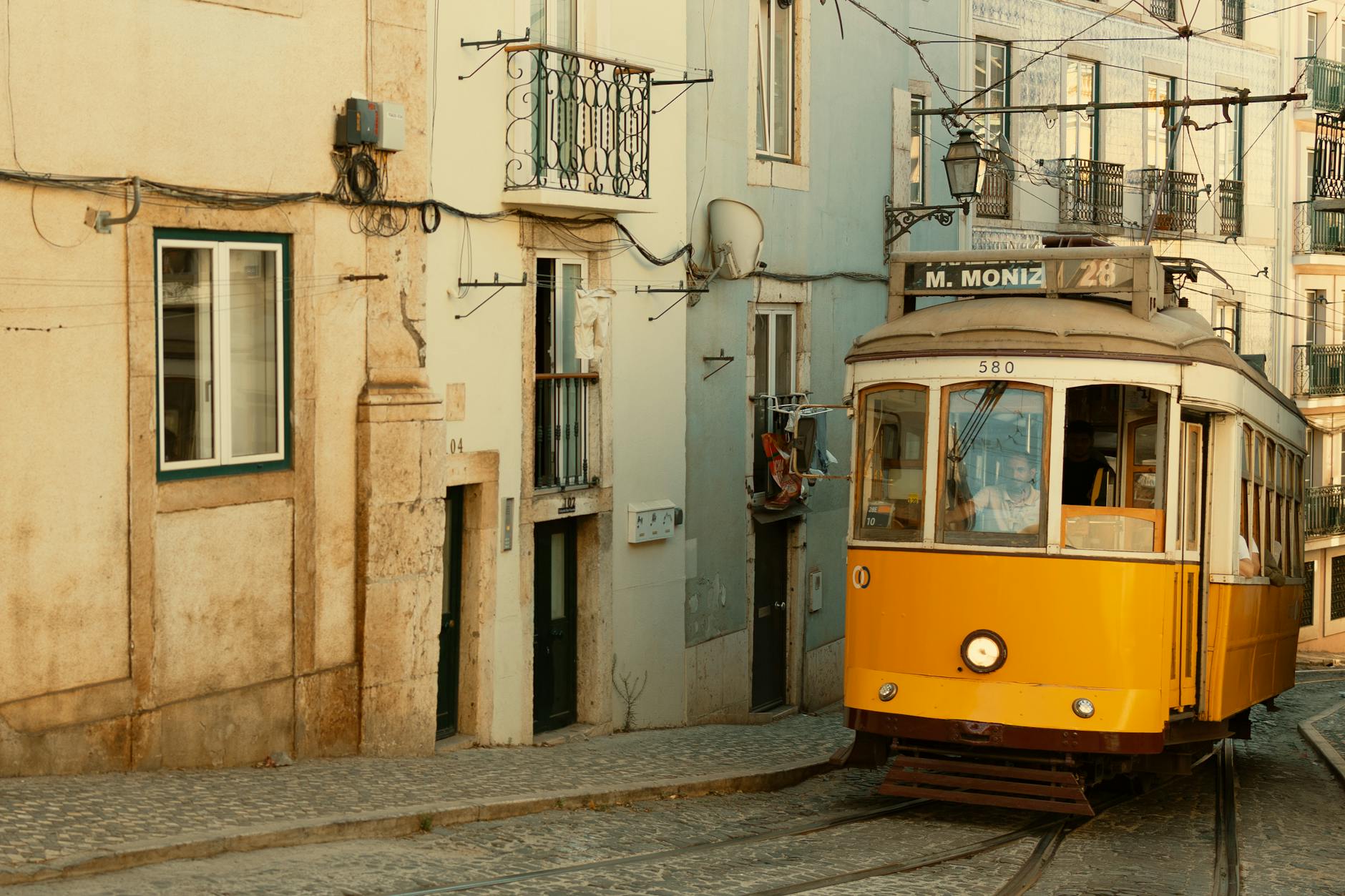
Tram 18E, 24E, 25E: The Locals’ Routes
Lisbon’s other tram lines run primarily for residents:
Tram 18E — Cemitério Ajuda to Cais do Sodré, serving western neighborhoods. Quiet, almost entirely locals.
Tram 24E — Praça Luís de Camões to Campolide, recently restored after a long suspension. Vintage carriages on a less-touristed route.
Tram 25E — Praça Camões through Estrela to Lapa. Residential western Lisbon. The Estrela Basilica is visible from the route.
For travelers who want the vintage tram experience without Tram 28’s crowds, any of these routes offer nearly identical carriages and empty seats.
How to Pay for Lisbon Trams
Viva Viagem Card (Recommended)
Reusable card costing €0.50 to buy. Load with various ticket types:
- Single ride: €1.80 (use this on tram if you have the card)
- Zapping credit: Pre-loaded balance, charges €1.80 per ride
- 24-hour pass: €7.25, unlimited tram + metro + bus + ferry
- 72-hour pass: €18.50
Buy at metro station vending machines. Tap the yellow reader at the front of the tram when boarding.
On-Board Cash Purchase
A single ride on-board costs €3 cash — more expensive than the Viva Viagem rate. The conductor takes coins and small bills, no large notes. Exists mostly for travelers who haven’t picked up a Viva Viagem card yet.
Lisboa Card
The 24-, 48-, or 72-hour Lisboa Card includes unlimited tram travel plus free entry to roughly 50 attractions. Worth it if you’ll visit 3+ ticketed sites.
Contactless Bank Cards
Newer Lisbon trams (Tram 15E modern carriages) accept contactless bank card payments at boarding. Vintage trams (Tram 28, 12, 18, 24, 25) typically don’t — use Viva Viagem.
The History of Lisbon Trams
Lisbon’s first horse-drawn trams started running in 1873. Electric trams arrived in 1901, and the network expanded rapidly through the early 20th century — at its peak in the 1950s, Lisbon had 27 tram lines covering nearly the entire city.
The 1960s and 1970s saw most lines closed in favour of buses and cars. By 1995, only five tram lines survived. The famous yellow Remodelado carriages — single-truck wooden trams from the 1930s — were preserved on the steep hilly routes (Tram 28, 12, 18, 24, 25) where buses couldn’t operate.
Carris has gradually restored the network: Tram 24 reopened in 2018 after a 30-year suspension. The tradition is taken seriously — Lisbon’s vintage trams are protected cultural heritage.
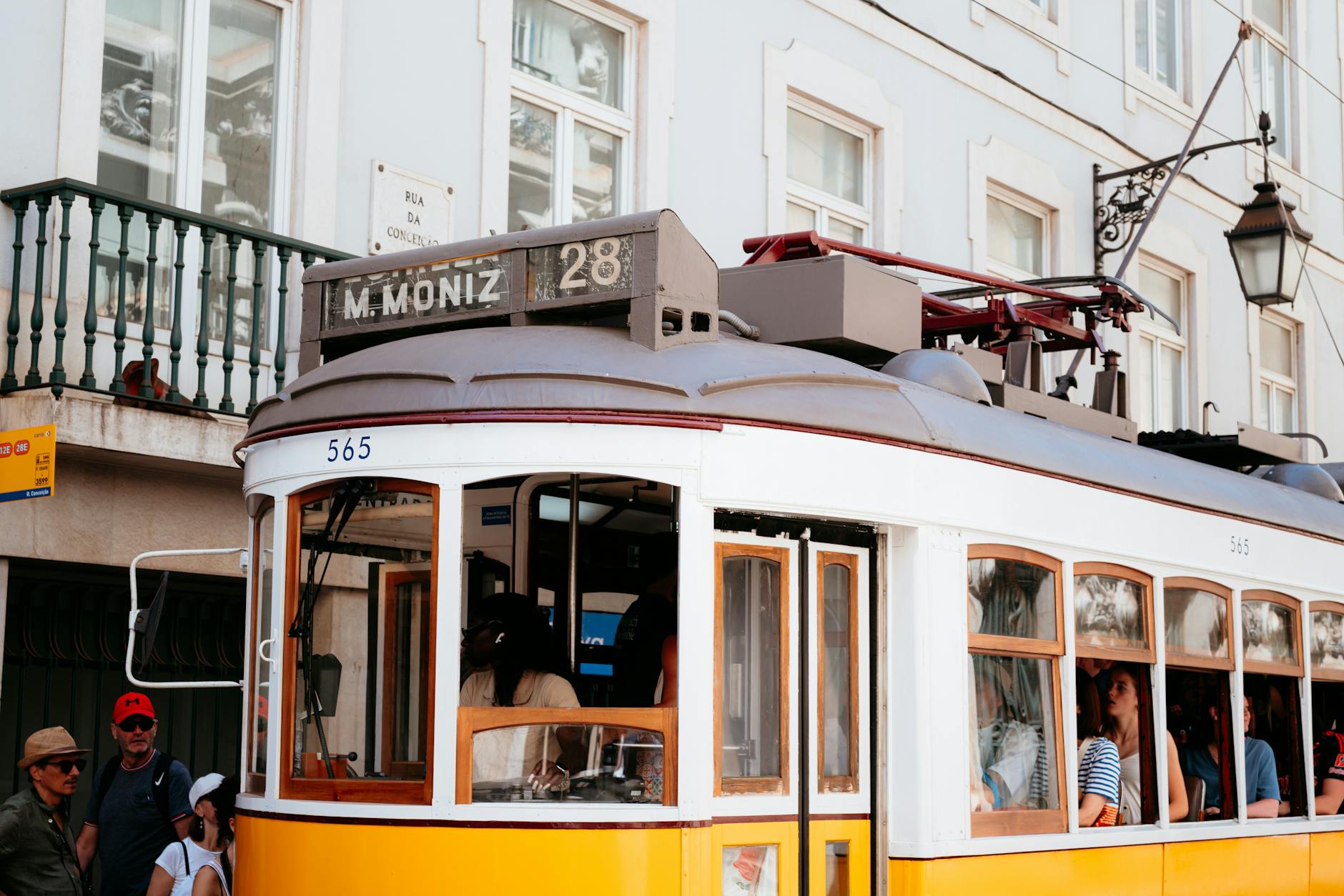
Tram Etiquette
- Stand back from the doors at boarding/exiting — pickpockets work the squeeze moments
- Tap your card when boarding — failure to validate is a €60 fine
- Hold the leather straps on vintage trams — they don’t have modern handrails
- Yield seats to elderly riders, pregnant women, and people with children
- Don’t put feet on seats — Portuguese culture takes this seriously
- Photography is fine from inside; just don’t block other riders
- Mind the gap at narrow stops — vintage trams sit closer to traffic
Tram Safety
Lisbon trams are physically safe but pickpocket-targeted. The basics:
- Front pockets only — no wallets in back pockets
- Bags zipped, in front of your body
- Phone in a hidden pocket while standing
- Be aware of sudden bumps or commotion (classic distraction tactic)
- Don’t display expensive cameras or jewellery
For broader safety context, see our is Lisbon safe guide.
Best Times to Ride Lisbon Trams
Tram 28: Early morning (8–9 AM) before the tour groups arrive, or late evening (after 8 PM) when crowds thin. Avoid 10 AM–6 PM in summer.
Tram 15E: Mid-morning (10–11 AM) heading to Belém, after-museum return (5–6 PM). Less crowded than rush hours.
Other vintage trams (12, 18, 24, 25): Any time — they’re rarely crowded.
Photographers: late-afternoon golden hour (1–2 hours before sunset) gives the best light for the yellow carriages against terracotta backdrops.
Photography Tips
Best vantage points to photograph trams:
- Largo das Portas do Sol — Tram 28 climbing the hill with Alfama rooftops behind
- Rua da Conceição — vintage trams approaching Sé Cathedral
- Calçada do Combro — descending into Bica, classic frame
- Largo do Carmo — Tram 28 emerging from Bairro Alto
- Estrela — turning point with the basilica behind
For shots from inside the tram, sit on the right side travelling east-to-west on Tram 28 — the views over Alfama and the Tagus are best from there.
Lisbon Trams vs Other Transit
| Mode | Best for | Speed | Cost |
|---|---|---|---|
| Tram (vintage) | Sightseeing, atmosphere | Slow (8–12 km/h) | €3 / €1.80 with pass |
| Tram 15E (modern) | Belém transport | Faster (15–20 km/h) | €3 / €1.80 with pass |
| Metro | Long distances, airport | Fastest (30–40 km/h) | €1.90 / day pass |
| Bus | Hill access, outer areas | Medium | €2.10 / day pass |
| Walking | Historic core | 4 km/h | Free |
| Uber/Bolt | Late nights, luggage | Variable with traffic | €8–€15 typical |
For broader transit context, see our Lisbon Transportation Guide pillar.
The Funiculars (Bonus)
Three small “trams” you might also encounter — technically funiculars, operated by Carris and treated as part of the tram system:
- Elevador da Bica — climbs Bairro Alto from Rua de São Paulo. The famous yellow car.
- Elevador da Glória — climbs from Restauradores to Bairro Alto/São Pedro de Alcântara.
- Elevador do Lavra — climbs from Largo da Anunciada toward Miradouro do Torel.
All run on the same Viva Viagem card. €4 single ride or included in the day pass. See our funiculars guide for details.
Common Tram Mistakes
1. Lining up at Praça Martim Moniz. 45–90 minute waits. Board mid-route instead.
2. Buying single rides. €3 each adds up fast. Get a 24-hour Viva Viagem pass for €7.25 (covers all transit).
3. Not validating your card. Tap the yellow reader at boarding. Failure to validate is a €60 fine.
4. Riding Tram 28 at midday in summer. Most crowded period, smallest carriage, pickpocket peak. Switch to Tram 12 or visit at off-peak hours.
5. Trying to ride end-to-end. 45 minutes is too long for the experience to stay enjoyable. Ride the Alfama section (15–20 minutes) and walk the rest.
6. Forgetting about modern Tram 15E. The Belém route is significantly more comfortable and reliable than the vintage trams.
7. Carrying valuables in back pockets. Front pockets and money belts only.
FAQ: Lisbon Trams
How much does a Lisbon tram cost?
€3 for a single ride paid on-board, or €1.80 with a Viva Viagem card. The 24-hour Viva Viagem pass (€7.25) covers unlimited tram + metro + bus + ferry — best value if you’ll take 3+ rides.
Is Tram 28 worth it?
Yes for the experience, but ride smartly: board at less-crowded mid-route stops, travel at off-peak hours, and consider Tram 12 for a quieter version of the same vintage carriages.
What is the best Lisbon tram?
Tram 28 for the iconic experience. Tram 15E for practical transport to Belém. Tram 12 for the same vintage carriages without crowds. Tram 25 for an off-tourist-track local route.
How long does Tram 28 take end-to-end?
45 minutes from Martim Moniz to Campo de Ourique. Most travellers ride only the Alfama section (15–20 minutes), which is the most photogenic.
Are Lisbon trams accessible?
Vintage trams (Tram 28, 12, 18, 24, 25) are NOT wheelchair accessible — they have steps and narrow doors. Modern Tram 15E IS wheelchair accessible with low floors and ramps.
Do Lisbon trams have schedules?
Trams run roughly every 5–15 minutes during the day, less frequently in evenings. They follow rough schedules but can be delayed by traffic and tourist crowds. Check the Carris app for live tracking.
Is Tram 28 safe?
Physically yes, but it’s Lisbon’s #1 pickpocket route. Front pockets, bags in front of body, no flashy electronics on display.
Can I use the same ticket on tram and metro?
Yes — Viva Viagem cards work on tram, metro, bus, and most ferries. The 24-hour day pass covers all of them.
What’s the difference between Tram 28 and Tram 12?
Both use the same 1930s vintage carriages. Tram 28 covers a longer route through more famous neighbourhoods (Alfama, Chiado, Estrela). Tram 12 is a smaller loop through Alfama and Mouraria — same charm, fewer crowds.
What time do Lisbon trams stop running?
Most lines run 6 AM – 11 PM, with reduced service in evenings. Tram 28 and 15E run latest. After 11 PM, use night buses or Uber.
Bottom Line
Lisbon’s vintage yellow trams are one of the city’s most memorable experiences — but ride them with some strategy. Board Tram 28 at less-crowded mid-route stops, travel at off-peak hours, and try Tram 12 for the same charm without the queues. For practical transport to Belém, take modern Tram 15E. Buy a 24-hour Viva Viagem pass to use trams, metro, buses, and ferries on a single card. Watch for pickpockets, hold the leather strap on the vintage cars, and enjoy a ride that most cities stopped running 60 years ago.
Continue planning transit with our Lisbon Transportation Guide pillar, our airport to city center guide, our Metro guide, and our funiculars and elevators guide.