Day Trips from Lisbon
Sintra Day Trip from Lisbon: Complete Planning Guide (2026)
Plan the perfect Sintra day trip from Lisbon—which palaces to visit, how to get there, ticket tips, best itinerary, and common mistakes to avoid.

In this guide
- Sintra at a Glance
- The Short Answer: Best One-Day Sintra Day Trip from Lisbon
- How to Get from Lisbon to Sintra
- Getting Around Sintra
- The Palaces of Sintra: What to See
- Sintra Day Trip Mistakes to Avoid
- Where to Eat in Sintra
- What to Pack for a Sintra Day Trip
- Sintra in Different Seasons
- Combining Sintra with Cascais or Cabo da Roca
- Two-Day Sintra Itinerary
- FAQ: Sintra Day Trip from Lisbon
- Bottom Line
- Photo Credits
A Sintra day trip from Lisbon is the most-recommended single excursion in Portugal — and for good reason. The palaces, mist-wrapped Moorish ramparts, hidden gardens, and forested hills sitting just 40 minutes by train from central Lisbon make Sintra one of Europe’s most rewarding day trips. But Sintra is also a place where unprepared visitors waste hours in queues, miss the best palaces, and leave exhausted and underwhelmed.
If you have a car and only want one palace, the afternoon is better spent on the coast — see our Sintra coast beaches guide.
Lunch is the part of a Sintra day that most often goes wrong. See where to eat in Sintra for why eating at three in the afternoon beats eating at one, and which streets to avoid entirely.
The alternative to all this is sleeping here. See where to stay in Sintra for what an overnight buys you: an empty Pena at opening, and the town after the coaches have gone.
Tempted to bolt the cape onto the end of a Sintra day? Read our Cabo da Roca guide first — it is easiest with a car, and by bus you should check the time of the last departure back before you set off.
If the forecast says thirty degrees, swap a hill monument for Monserrate — deep shade, a cool fern ravine, and a fraction of Pena’s crowd.
Finish in town rather than on the hill: the National Palace stays open until 18:30 with last admission at 17:30, making it the natural closer to a day that started at the top.
If you want a second monument that is not timed-entry, the Moorish Castle is the flexible piece in a Sintra day — walk down to it from Pena rather than queueing for the bus twice.
Before you book anything, read our Sintra tickets and queue guide — it sets out what each 2026 ticket costs, what the combined ticket really saves, and where to catch bus 434 for Pena and the Castle of the Moors.
Regaleira slots in well after Pena and the Castle of the Moors. See our Quinta da Regaleira guide for how to fit it into a single day.
This page is the one-day plan. If you want Sintra as a destination rather than an excursion — every palace, the coast, and the case for staying the night — start with our complete Sintra guide.
This guide is everything you need to do Sintra right in a single day: the optimal itinerary, how to get there, ticket and bus tips, the parking and access rules around the palaces, what to skip if you’re short on time, and the small details — water, food, footwear, photo timing — that separate a chaotic day from a great one.
Sintra at a Glance
Sintra (population ~30,000) sits on the western edge of the Lisbon metropolitan area, about 30 km from central Lisbon, in a microclimate of damp Atlantic forest where the kings of Portugal built their summer palaces from the 14th century onward. UNESCO inscribed the Cultural Landscape of Sintra as a World Heritage Site in 1995, and its palaces, castle ruins and gardens are spread across the hills above the town.
Four sights appear in nearly every guide:
- Pena Palace (Palácio da Pena) — the colorful 19th-century Romantic palace at the top of the hill, the iconic Sintra image
- Castle of the Moors (Castelo dos Mouros) — 10th-century hilltop fortress ruins with sweeping views
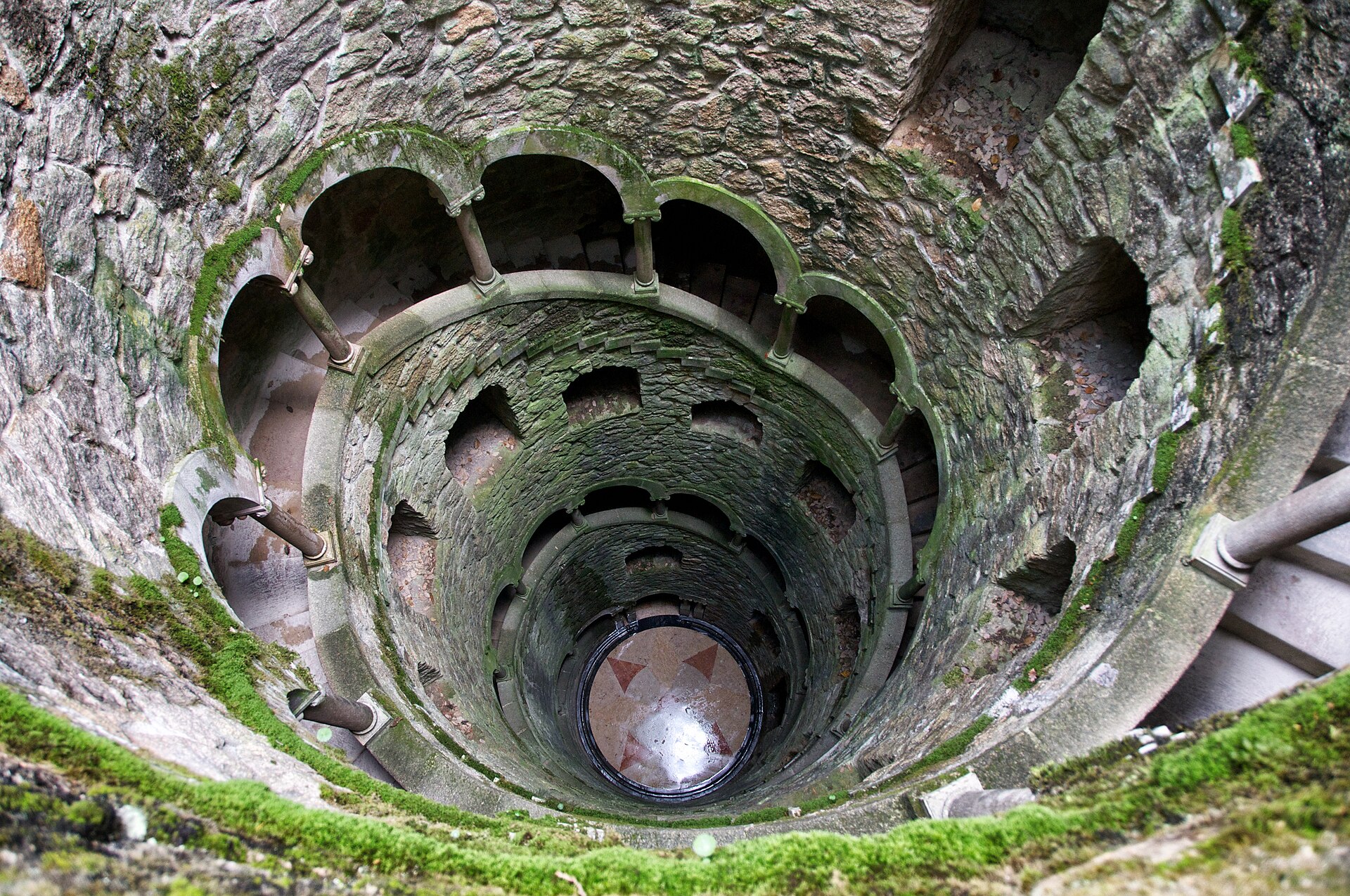
- Quinta da Regaleira — turn-of-the-century mystical estate with the famous “Initiation Well” spiral staircase
- National Palace of Sintra (Palácio Nacional de Sintra) — the medieval royal palace in the town center, recognizable by its two giant white conical chimneys
You can comfortably visit two or three of these in a single day. Three is achievable if you start early, plan your route, and keep lunch short.
The Short Answer: Best One-Day Sintra Day Trip from Lisbon
The optimal Sintra day trip from Lisbon, used by every well-prepared visitor:
7:30 AM — Leave Lisbon hotel. Walk or metro to Rossio station.
7:55 AM — Catch CP train to Sintra. €2.05 with Zapping on a Navegante card, journey about 40 minutes.
8:35 AM — Arrive Sintra station. Board bus 434 to Pena Palace; the operator’s first departure is at 8:50 AM.
9:30 AM — Enter Pena Palace when the palace opens (the park opens at 9:00 AM). Spend 90 minutes (palace + park).
11:00 AM — Walk 10 min to Castle of the Moors. Spend 60–75 minutes.
12:30 PM — Bus 434 down to Sintra historic centre. Lunch (1 hour).
2:00 PM — Walk 15 min to Quinta da Regaleira. Spend 90–120 minutes.
4:30 PM — Walk back to Sintra station. Catch return train to Lisbon.
5:50 PM — Back at Rossio.
If you only have time for two sights, do Pena Palace + Quinta da Regaleira — the two most distinctive experiences. Skip the Castle of the Moors first; skip the National Palace second.
How to Get from Lisbon to Sintra
By Train (Best Option)
The CP suburban Sintra line runs from Rossio Station (central Lisbon) throughout the day; intervals vary with the time and day, so check CP’s timetable for your travel date. Journey time: about 40 minutes. Fares: with Zapping credit on a Navegante occasional card, each trip costs €2.05 (€4.10 there and back). You can also board at Oriente, which takes about 50 minutes.
First useful train from Rossio: around 6:00 AM. Last train back from Sintra: the weekend and public-holiday timetable includes a 12:20 AM departure, reaching Rossio at 12:59 AM; check the timetable for your travel date. Tickets are bought from machines at the station — load credit onto a Navegante occasional card (€0.50, reloadable for a year) or use the card you’ve been using for Lisbon’s metro.
The train is cheap, frequent, fast, and avoids Sintra’s notoriously bad parking situation. About 90 percent of independent travelers should take the train.
By Car (Avoid If You Can)
Driving to Sintra is technically possible via the IC19 highway. But private vehicles cannot reach Pena Palace or the Castle of the Moors, and driving in the historic centre is restricted to residents. Park at the Estefânia parking lot near Sintra station (€2/hour) and use bus 434/435. Don’t drive the narrow hilltop roads — many are restricted and police actively enforce this.
By Tour or Private Transfer
Group tours (€55–€110) and private transfers (€140–€280 for the whole group) provide direct service to each palace plus skip-the-line tickets. Worth considering with mobility issues, elderly companions, or small children. Otherwise, the train is faster and dramatically cheaper.
Getting Around Sintra
Bus 434 — The Pena Palace Loop
Bus 434 runs a hop-on-hop-off circuit linking Sintra Station, the historic centre, the Castle of the Moors and Pena Palace. The operator lists departures about every 10 minutes from 8:50 AM; confirm the last departure on sintra434.com before you head up.
Cost: €13.50 for a 24-hour ticket — sold online (with an 8% discount), at sales points and on the bus.
Bus 435 — The Quinta da Regaleira Loop
Bus 435 covers a different circuit, serving Quinta da Regaleira, Seteais and Monserrate, with departures every 10 minutes. There is no separate day ticket for it.
If you’re doing the full Sintra circuit (Pena + Moors + Regaleira), the €13.50 ticket covers both 434 and 435 for 24 hours from first validation — the most cost-effective option.
Walking
Walking up to Pena Palace is a very steep climb through the forest — only do this in cool weather if you enjoy hiking, and follow one of the marked trails Parques de Sintra describes on its how-to-get-there page. The walk between Sintra historic centre and Quinta da Regaleira is a much easier stroll.
The Palaces of Sintra: What to See
Pena Palace (Palácio Nacional da Pena)
Why visit: The iconic Sintra image — a wildly colorful 19th-century Romantic palace with bright yellow, red, and lavender facades, perched on a peak with 360-degree views over the surrounding hills, the Tagus, and (on clear days) the Atlantic. King Ferdinand II bought the ruined 16th-century monastery in 1838 and turned it into the palace.
What to see inside: The state apartments, the chapel, and the dramatic kitchen. Allow 90 minutes for the palace plus park; longer if queues are heavy.
Tickets: €20 (palace + park) or €12 (park only). Buy online in advance at parquesdesintra.pt — Pena requires timed-entry tickets for the palace interior, sold for a specific date and time.
Hours: 9:30 AM – 6:30 PM (last tickets 5:30 PM, last admission 6:00 PM). Park opens 9:00 AM.
Tip: Buy the earliest available timed slot, ideally 9:30–10:00 AM. Crowd density between 11 AM and 3 PM is genuinely uncomfortable, with the palace’s narrow corridors creating bottlenecks.
Quinta da Regaleira
Why visit: A turn-of-the-century estate: António Augusto de Carvalho Monteiro bought it in 1893, architect Luigi Manini began the gardens in 1898, and building work on the main house and chapel followed in 1904. The grounds blend Gothic, Renaissance, Manueline, and Templar-Masonic symbolism into one of Europe’s most atmospheric gardens. The Initiation Well — an inverted spiral staircase descending into a moss-covered stone shaft — is the centrepiece.
What to see: The main palace, the chapel, the Initiation Well, the underground tunnel network, the Loggia, and the Promenade of the Gods. Allow 90–120 minutes minimum.
Tickets: €20 adults (18–64), €15 ages 6–17 and 65+, free for children aged five and under. Book online in advance.
Hours: April–September: 9:00 AM – 7:30 PM. October–March: 10:00 AM – 6:30 PM. Last admission 5:30 PM.
Tip: The descent into the Initiation Well goes one way (top to bottom) — take photos at each landing as you go down.
Castle of the Moors (Castelo dos Mouros)
Why visit: A fortress founded in the 10th century, during the Islamic period of Portuguese history. The ruined ramparts trace the contours of a hilltop just below Pena Palace, offering some of the best views in Sintra. A good change of pace from interior tours.
What to see: The walls themselves — this is an outdoor, walking-the-ramparts experience. Allow 60–75 minutes.
Tickets: €12 adults, €10 children. Buy online at least three days ahead for 15% off (€1.80 on an adult ticket).
Hours: 9:30 AM – 6:00 PM (last admission 5:30 PM).
Tip: Most logical to combine with Pena Palace — they sit on adjoining peaks with a short downhill walk connecting them.
National Palace of Sintra (Palácio Nacional de Sintra)
Why visit: The oldest palace in Portugal, with origins under Moorish rule and royal rooms expanded in the 14th–16th centuries. The two huge white conical chimneys above the kitchen are Sintra’s other iconic image. The Magpie Room, the Swan Room, and the Coats of Arms Room are exceptional.
Tickets: €13 adults, €10 children.
Hours: 9:30 AM – 6:30 PM. Open daily except 24–25 December and 31 December–1 January.
Tip: Most tourists skip this for Pena or Regaleira — which is the right call on a strict one-day visit. But the medieval interiors are genuinely unique; don’t skip it on a second trip.
Monserrate Palace
Why visit: A 19th-century palace built for Francis Cook outside Sintra centre, mixing Gothic and Indian influences with Moorish details, set in notable botanical gardens. Far less crowded than Pena.
Tickets: €12 adults (park and palace).
Hours: Park 9:00 AM – 7:00 PM (last admission 6:00 PM); palace 9:30 AM – 6:00 PM (last admission 5:30 PM).
Tip: Best saved for a return visit when you want something quieter.

Sintra Day Trip Mistakes to Avoid
1. Going on weekends in summer. Pena’s palace tickets are sold for a specific date and time, so a July–August weekend without a booking is a gamble. Tuesday–Thursday is dramatically calmer.
2. Buying tickets at the gate. Pena, Regaleira, and the Moors all sell timed-entry tickets online via their official sites or GetYourGuide. Buy ahead — it saves both money and time.
3. Trying to do four palaces in one day. You’ll spend more time queuing and hiking than actually experiencing anything. Two is the sweet spot; three is the limit.
4. Walking up to Pena Palace. It’s a steep forest climb that uses up energy you’ll want for the palace. Take the 434 bus.
5. Underestimating the weather. Sintra’s damp microclimate keeps it usually cooler than central Lisbon and often misty. Bring a light jacket and waterproof shell.
6. Wearing the wrong shoes. Sintra is steep, cobbled, and often wet. Closed-toe walking shoes with grip are essential.
7. Leaving too late. Aim to leave Sintra by 5:30 PM to avoid the return-traveler rush, and check CP’s timetable for the departures that day.
8. Skipping lunch. Sintra has reliable restaurants — Cafe Saudade, Tascantiga, Romaria de Baco, and Cantinho Gourmet are all solid. Eating well at lunch resets your energy for the afternoon.
9. Driving and trying to park near the palaces. Private cars can’t reach Pena Palace or the Castle of the Moors, and driving in the historic centre is restricted to residents. Use a car park on the edge of town, or you’ll waste 60–90 minutes finding alternative parking and getting back to bus 434.
10. Turning up on a holiday closing day. The National Palace opens every day except 24–25 December and 31 December–1 January, and Quinta da Regaleira closes on 1 January and 24, 25 and 31 December. Plan a festive-season visit around those dates.
Where to Eat in Sintra
Tascantiga (historic centre)
Modern petisco-style restaurant on Rua das Padarias — small plates, charcuterie, cheeses, and Portuguese wines. Mains €13–€20. Reservations recommended on weekends.
Cafe Saudade
The standard Sintra brunch and coffee stop. Best travesseiros (Sintra’s signature pastry — flaky rectangular pastry filled with almond and egg-yolk cream) in town. Light lunches €8–€14.
Romaria de Baco (historic centre)
A wine bar with good traditional small plates — bacalhau croquettes, cheese boards, octopus salad. Mains €14–€22.
Piriquita
The original travesseiro bakery, open since 1862. Try one travesseiro and one queijada (small cheese tart, also a Sintra specialty). €1.20–€2 per pastry. Order at the counter; don’t sit-in.
Tulhas Bar e Restaurante
Hearty traditional Portuguese — bacalhau à brás, açorda, grilled fish. Mains €12–€18. Pleasant terrace.
Cantinho Gourmet
A short walk from the historic centre. Small family-run kitchen, daily-changing regional Portuguese menu. €18–€26 mains.
What to Pack for a Sintra Day Trip
- Comfortable walking shoes (closed-toe, with grip)
- A light jacket or shell (Sintra runs cool and damp)
- A water bottle (refill stations are common)
- Sunscreen + a small umbrella (weather changes fast)
- Phone with offline maps downloaded (signal is spotty in the hills)
- Cash for small purchases (most palaces accept cards but smaller stalls don’t)
- Pre-purchased tickets on your phone (Pena, Regaleira, Castle of the Moors)
Sintra in Different Seasons
Spring (March–May)
The best time to visit. Wildflowers in the gardens and mild temperatures. April and May are particularly good at Quinta da Regaleira and Monserrate.
Summer (June–August)
The most crowded period, so book Pena’s timed palace tickets well ahead. The hills usually run cooler than the city, but expect lines everywhere. Arrive by 8:30 AM or reconsider the date.
Autumn (September–October)
The second-best window. Crowds drop sharply after the second week of September, weather stays warm but not hot, and the autumn light through the forests is excellent.
Winter (November–February)
Sintra’s quietest period. More rain, occasional fog that cancels the famous Pena views, shorter daylight hours. But you’ll have palaces nearly to yourself and the moss-covered Quinta da Regaleira is at its most atmospheric.
For broader weather and seasonal context, see our best time to visit Lisbon guide.
Combining Sintra with Cascais or Cabo da Roca
On a long summer day, you can combine Sintra with Cascais (a coastal resort to the south) or Cabo da Roca (the westernmost point of mainland Europe).
Sintra + Cascais: Carris Metropolitana bus 1253 runs from Sintra station via Cabo da Roca, and route 1624 also serves the cape; check carrismetropolitana.pt for current departures and journey times, including the onward leg to Cascais. From Cascais, the Cascais line train goes back to Cais do Sodré in about 33–40 minutes, depending on the service. The classic “loop” — but only attempt it if you’ve finished Sintra by 3 PM.
See our Cascais day trip guide for the full breakdown.
Two-Day Sintra Itinerary
Two days in Sintra is genuinely better than one. Staying overnight lets you do all four major palaces, eat properly, and experience Sintra at its quietest — early morning and after the day-trippers leave. Options: Tivoli Palácio de Seteais (luxury), Sintra Boutique Hotel (mid-range), or Casa Holstein Quinta de Sao Sebastiao (boutique mid).
Day 1: Pena Palace + Castle of the Moors. Lunch in town. Evening at Tivoli Palácio de Seteais.
Day 2: Quinta da Regaleira morning. National Palace afternoon. Optional Monserrate or Cabo da Roca.
FAQ: Sintra Day Trip from Lisbon
Is Sintra worth visiting?
Yes. Most Lisbon visitors rate Sintra the highlight of their trip. The combination of distinctive palaces, dramatic scenery, and easy day-trip logistics makes it Portugal’s single best excursion.
How long should I spend in Sintra?
One full day is the standard, two days is better, and a half-day is too rushed unless you commit to seeing only one palace. Leave Lisbon by 8 AM and return by 6 PM.
Can you visit Sintra without a guide?
Yes — Sintra is straightforward to navigate independently. The trains, buses, and palaces all have clear English signage and online ticketing. Guides add context but are not needed for logistics.
Do I need to book Sintra tickets in advance?
Yes, especially for Pena Palace — timed-entry slots regularly sell out. Buy online via parquesdesintra.pt or GetYourGuide. Quinta da Regaleira and Castle of the Moors also benefit from advance booking but are less critical.
How much does a Sintra day trip cost?
Budget €72.50–€97.50 per person for the full day: €4.10 train (two Zapping trips), €13.50 bus pass, €20 Pena Palace, €20 Regaleira, €15 lunch, plus small extras. Add Castle of the Moors (€12) if you do three sights.
Is Sintra suitable for kids?
Yes — particularly Quinta da Regaleira (the Initiation Well and tunnels are genuinely thrilling for children) and Pena Palace (the colors, towers, and views work for all ages). Castle of the Moors involves more walking and exposed heights; use judgment with smaller children.
What’s the best month to visit Sintra?
Late April–early June or mid-September–October. Mild weather, manageable crowds, lush greenery, and less rain than winter.
Can I park near Pena Palace?
No — private cars can’t get to Pena Palace or the Castle of the Moors, and only residents may drive in the historic centre. Park in lower-town lots and use bus 434.
What’s the difference between Pena Palace and Quinta da Regaleira?
Pena is a colorful Romantic palace with state apartments and dramatic mountaintop views. Regaleira is a smaller estate famous for its mystical gardens, the Initiation Well, and underground tunnels. They complement each other well — Pena is the big visual impact, Regaleira is the memorable experience. See our dedicated Pena Palace guide for full detail.
Is the Castle of the Moors worth it?
Yes if you have time; drop it first if you’re rushing. The views are excellent but the experience is fundamentally walking ruined walls. Pretty, but not essential on a tight one-day plan.
Bottom Line
The best Sintra day trip from Lisbon starts before 8 AM at Rossio Station, prioritizes Pena Palace + Quinta da Regaleira, books all tickets in advance, uses the 434 + 435 bus pass, and leaves Sintra by 5 PM. Skip the car. Skip lunch if you must. Drop the National Palace before you drop Pena or Regaleira. Get those things right and Sintra will be one of the best days of the trip.
Continue planning with our Day Trips from Lisbon pillar guide, our deeper Pena Palace guide, and our companion Cascais day trip and Óbidos day trip guides.
Photo Credits
The Initiation Well at Quinta da Regaleira: 2012-11-19 at 06-40-20 (8236617676) by lloydabell34, CC BY 2.0, via Wikimedia Commons.